 MTE Relayv5
Faster. Leaner.Stronger.
Measured against v4 on the same hardware, with stronger key exchange, verified data, and one dashboard to manage it all.
Measured October 1 to 2, 2026: v5 5.0.0 against the June 2026 v4 certification runs on the same workstation, median of four runs. How we measured
Raw performance.
Backed by results.
We reran the load tests that certified v4 in June 2026 against v5 5.0.0: the same payloads, the same connection ladders, the same 60 second holds, on the same workstation, four times over. v5 moves more requests through the same cores in every configuration we compared, answers faster, and needs a fraction of the memory.
Measured October 1 to 2, 2026: v5 5.0.0 against the June 2026 v4 certification runs on the same workstation, median of four runs. The engineering guide describes the v5 run and lists every v5 figure.
Data verified.
In every frame.
v4 streaming checks integrity when the stream ends. v5 validates each frame before decoding, then verifies its integrity before releasing any plaintext. The request method, response status, and headers are protected too. Every frame is checked. Only verified data reaches your application.
Altered data is rejected before use.
Stronger quantum resistant key exchange.
Kyber 1024 strengthens the quantum resistant key exchange that establishes each protected session. Clients check compatibility before pairing, so both ends agree before your data moves.
Your whole fleet. One control panel.
See Relay health and configuration in one place. Change supported settings live, track who changed what, and roll back a bad configuration. Other settings apply on restart. The panel is optional; Relays keep serving their last good configuration if it becomes unreachable.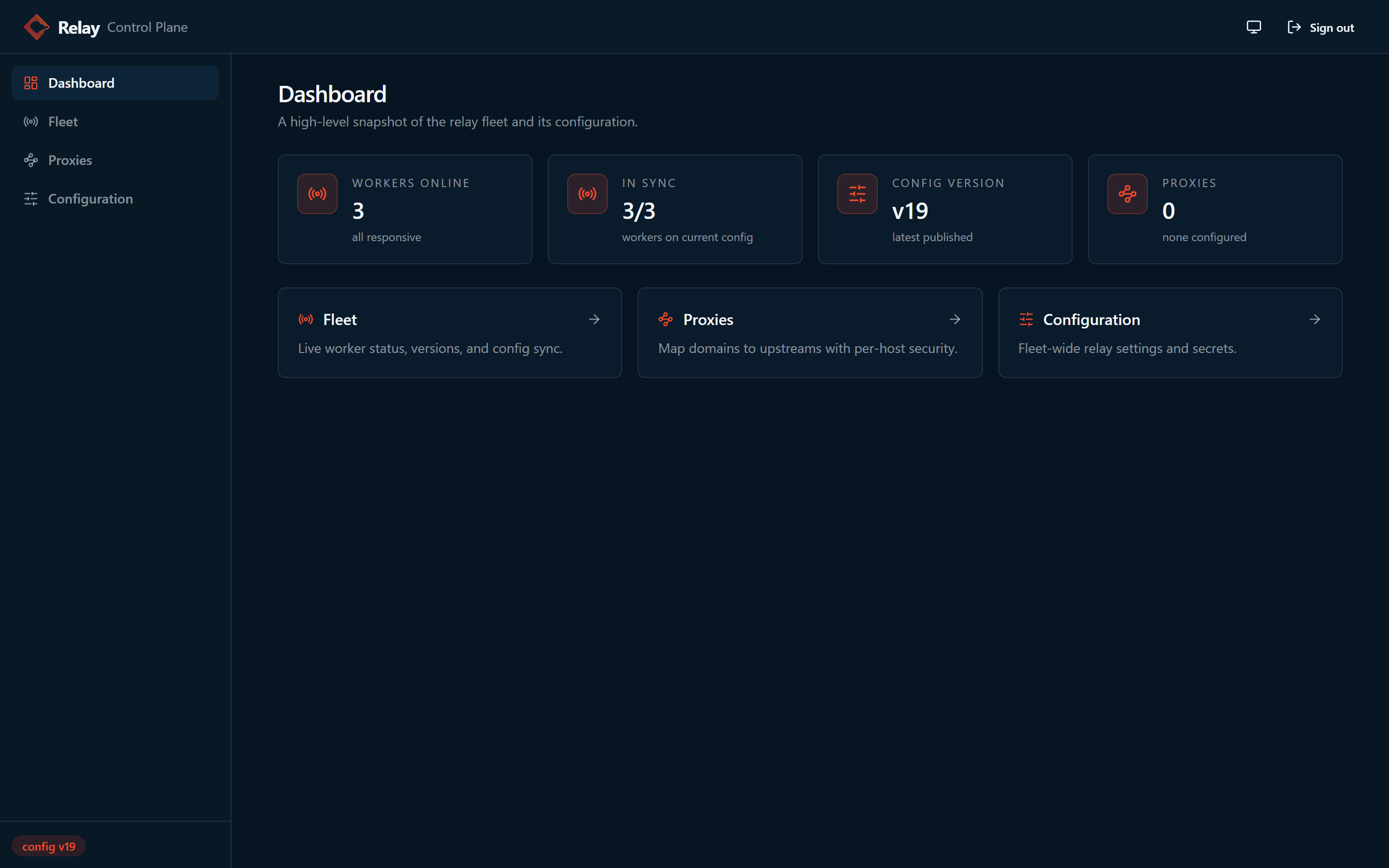
One frame.
Limitless transports.
v5 introduces a new frame generation. One binary envelope and one parser, shared across HTTP, WebSocket, and TCP. The HTTP Relay is what this release delivers. SocketX v2 for WebSocket and the TCP Gateway are built on the same frame, each versioned and released on its own. Requests, responses, and SSE streams through the HTTP Relay. Live sessions for chat, dashboards, and other real time services. Approved destinations such as SSH, mail, and databases.